

A modern crossbow is only part of the equation when it comes to accuracy, safety, and hunting success. The right accessories can dramatically improve your shooting experience, help maintain your equipment, and make your setup more effective in the field. Whether you are a beginner buying your first package or an experienced hunter upgrading your gear, these must-have crossbow accessories can make a major difference in both performance and convenience.
Some accessories focus on accuracy and consistency, while others improve safety, portability, or long-term durability. In this guide, we will break down the most useful crossbow accessories worth considering, explain which ones matter most for different types of users, and help you avoid wasting money on unnecessary add-ons.
If you are still deciding on a crossbow itself, start with our internal guide to Best Crossbows (Overall Guide) before building out your setup.
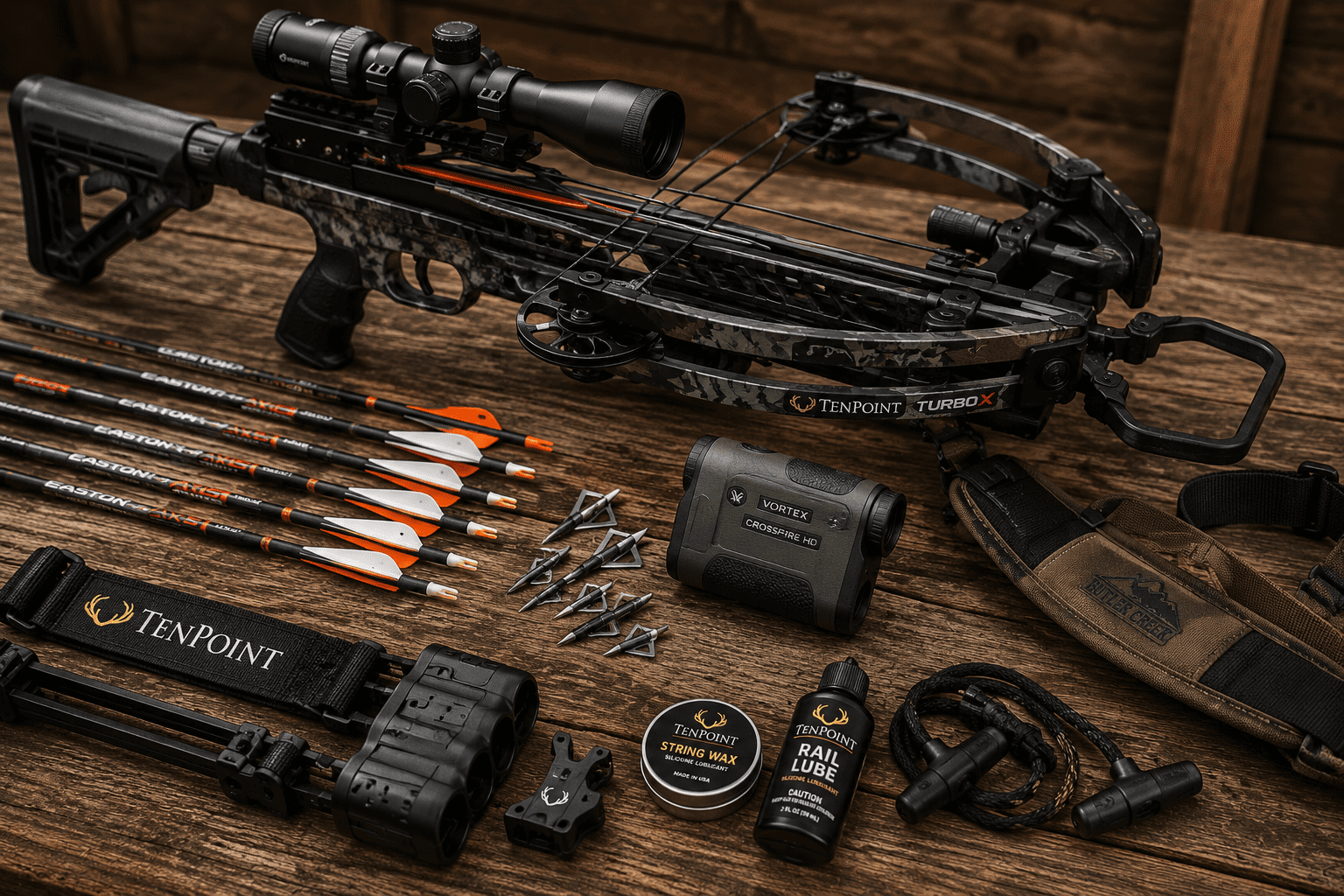
Table of Contents
Why Crossbow Accessories Matter
Many beginners assume that buying a crossbow package includes everything they need. While some bundles do come with scopes, bolts, and quivers, the included accessories are often entry-level components that leave room for improvement.
Good accessories can help you:
- Shoot more accurately
- Improve consistency at longer distances
- Increase hunting success
- Carry your equipment more comfortably
- Extend the lifespan of your crossbow
- Improve safety during transport and shooting
Hunters and target shooters also tend to prioritize different accessories. A deer hunter may value a quality sling, broadheads, and rangefinder, while a recreational shooter may focus more on targets, scopes, and maintenance gear.
Must-Have Crossbow Accessories for Every Shooter
1. Quality Crossbow Scope
A good scope is arguably the most important upgrade for many crossbow users. While basic package scopes work reasonably well at short distances, premium optics provide clearer glass, better low-light performance, and more reliable accuracy.
Modern crossbow scopes often include:
- Multiple aiming points for different yardages
- Illuminated reticles
- Speed calibration adjustments
- Better durability and waterproofing
Hunters especially benefit from clearer optics during dawn and dusk, when deer movement is most active.
Popular premium scope brands include Hawke, TenPoint, and Ravin.
More resources: Best Crossbow Scopes
2. Crossbow Bolts and Arrows
Your crossbow is only as accurate as the bolts you shoot. Cheap or poorly matched bolts can reduce consistency, damage broadheads, and even create safety issues.
Carbon bolts are generally preferred because they are:
- Lightweight
- Durable
- Consistent in flight
- Resistant to warping
Important things to consider include:
- Bolt length
- Grain weight
- Nock compatibility
- Broadhead alignment
Hunters should also keep several spare bolts because damaged arrows are common during practice and field use.
More resources: Best Crossbow Bolts
3. Broadheads for Hunting
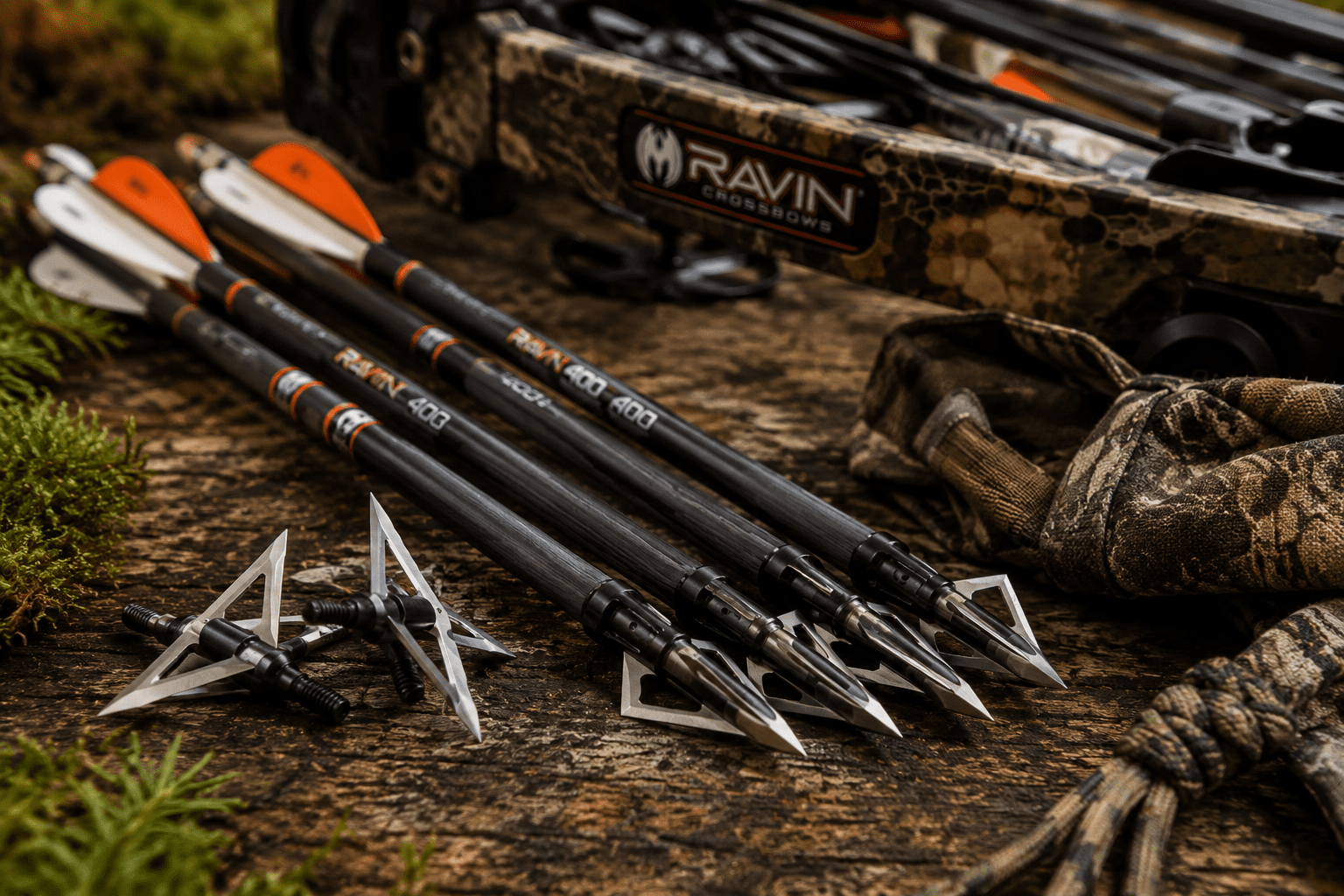
If you plan to hunt, quality broadheads are essential. Broadheads are the razor-sharp tips attached to hunting bolts and are designed for maximum penetration and ethical kills.
The two main types are:
Fixed-Blade Broadheads
- Extremely reliable
- Durable
- Simpler design
- Excellent penetration
Mechanical Broadheads
- Expand on impact
- Larger cutting diameter
- Often more accurate in flight
- Require higher-energy crossbows
Hunters using high-speed modern crossbows often prefer mechanical broadheads, while traditionalists may favor fixed blades for reliability.
Our Pick: G5 MegaMeat Crossbow Broadheads: A strong option for hunters looking for a purpose-built mechanical crossbow broadhead, with a large cutting diameter and replaceable blades.
4. Cocking Device or Crank System
Crossbows can require significant draw weight, often between 150 and 300 pounds. A cocking aid helps reduce effort while improving shooting consistency.
Benefits include:
- Easier cocking
- More consistent string alignment
- Reduced fatigue
- Improved safety
Rope cocking devices are affordable and lightweight, while crank systems offer maximum ease of use.
Many premium models like the TenPoint Turbo X include integrated systems such as ACUslide for safer cocking and de-cocking.
5. Crossbow Case
A good case protects your investment during transport and storage.
Soft cases are:
- Lightweight
- Affordable
- Easier to carry
Hard cases offer:
- Maximum protection
- Better airline/travel durability
- Improved weather resistance
Hunters travelling regularly or transporting expensive crossbows should strongly consider a hard case.
A quality case also helps prevent:
- Scope damage
- String wear
- Limb damage
- Dirt and moisture buildup
Our Pick: Allen Company Copperhead Crossbow Case: A practical soft case with a padded design and enough room for many popular crossbows, making it a good all-round choice for transport and storage. Check the case dimensions against your crossbow before ordering to make sure it will fit.
6. Sling for Easier Carrying
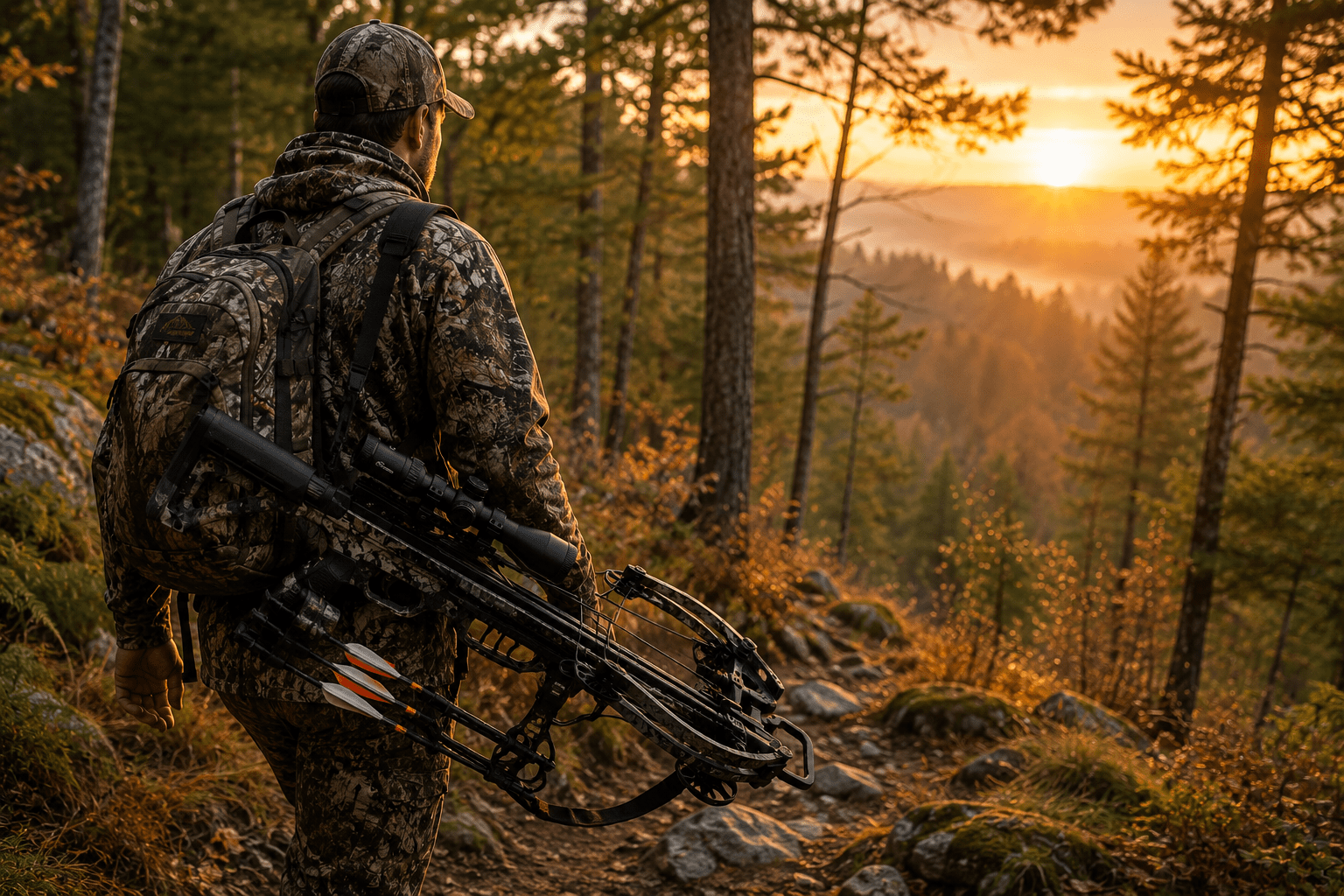
Crossbows are heavier and bulkier than traditional bows, especially during long hunts or hikes.
A sling allows you to:
- Carry the crossbow hands-free
- Reduce fatigue
- Move more quietly
- Climb safely into tree stands
Quick-detach slings are especially useful for hunters moving through dense terrain.
Our Pick: TenPoint Neoprene Crossbow Sling: A comfortable, purpose-built crossbow sling with a padded neoprene shoulder strap, designed to make carrying a crossbow easier in the field. It’s a particularly good fit for TenPoint and Wicked Ridge owners, although you should check attachment compatibility with your crossbow before ordering.
7. Rangefinder
Modern crossbows are extremely accurate, but distance estimation still matters. Even small range miscalculations can cause misses at longer distances.
A laser rangefinder helps determine:
- Exact yardage
- Angle compensation
- Better shot placement
This becomes particularly important when shooting from elevated tree stands.
Hunters serious about deer hunting should strongly consider pairing a rangefinder with a high-quality scope.
Our Pick: REVASRI Hunting Rangefinder: A budget-friendly option for shooters who want a compact rangefinder without spending heavily on premium optics. It offers rechargeable operation and multiple ranging modes, making it a practical entry-level choice for range use and hunting.
8. Crossbow Target
Using the wrong target can destroy bolts or create unsafe ricochets. Crossbows generate much more energy than standard bows, so dedicated crossbow-rated targets are important.
Good targets should:
- Stop high-speed bolts safely
- Allow easy bolt removal
- Last through repeated use
- Include visible aiming points
Bag targets work well for field points, while layered foam targets are often preferred for broadhead practice.
Our Pick: Delta McKenzie Crossbow Speedbag: A durable choice for regular crossbow practice, designed to stop high-speed crossbow arrows while still allowing relatively easy arrow removal. It’s a good option for backyard or range practice with field points, but you’ll need a broadhead-rated foam target if you want to practise with hunting broadheads.
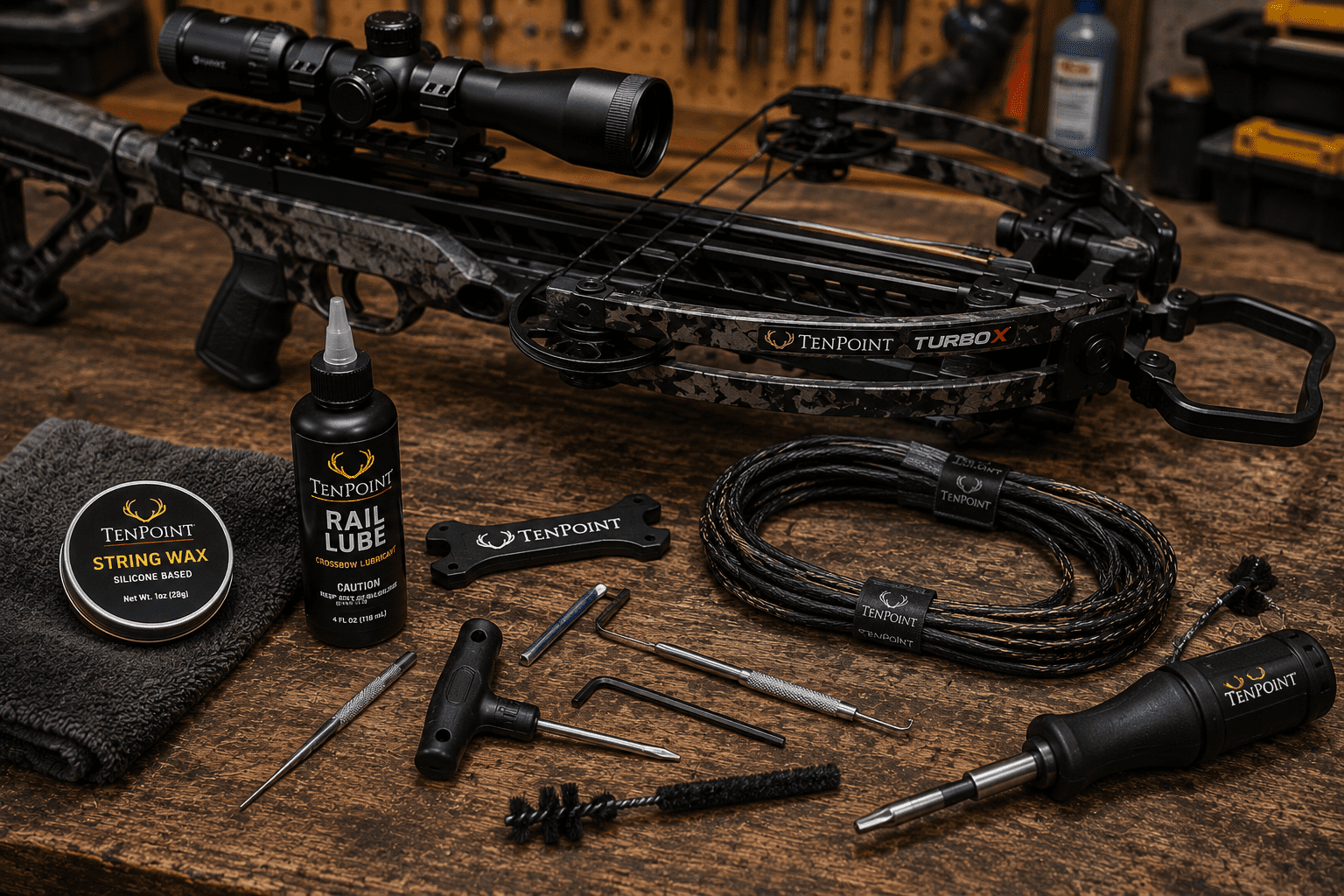
9. String Wax and Rail Lubricant
Crossbow maintenance is often overlooked by beginners, but proper care dramatically improves lifespan and performance.
String wax helps:
- Prevent fraying
- Reduce wear
- Protect against moisture
Rail lubricant:
- Reduces friction
- Improves string life
- Maintains shooting consistency
Most manufacturers recommend waxing the string regularly and lubricating the rail after a certain number of shots.
Archery Trade Association safety and maintenance resources
10. Bipod or Shooting Rest
A shooting rest can significantly improve stability during sighting-in and long-range practice.
Benefits include:
- Reduced movement
- Better grouping consistency
- Easier scope adjustment
- Improved comfort
Hunters using blinds also sometimes use compact bipods for steadier shooting positions.
Accessories That Beginners Should Prioritize
New crossbow owners do not need every accessory immediately. If you are starting out, prioritize these first:
- Quality bolts
- Proper target
- Cocking aid
- Case
- Scope upgrade (if needed)
This combination improves safety, consistency, and usability without overspending.
If you are still shopping for your first setup, our guide to Best Crossbows for Beginners explains which packages offer the best included accessories.
Hunting Accessories Worth Upgrading First
Hunters generally benefit most from upgrading:
- Scope
- Broadheads
- Sling
- Rangefinder
- Quieting accessories
Noise reduction accessories are also increasingly popular. Limb dampeners and string suppressors can slightly reduce vibration and help make shots quieter in the field.
This matters because deer can react extremely quickly to sound, especially at closer ranges.
Hunters using very high-speed models like the Ravin R500 or Ravin R470 often invest heavily in premium optics and stabilization accessories to maximize performance.
Accessories You Probably Do Not Need Immediately
Some accessories are nice to have but not essential for most users.
These include:
- Specialized tactical attachments
- Decorative upgrades
- Premium carrying systems
- Multiple quivers
- Electronic shot counters
Focus on improving accuracy, safety, and maintenance first before buying cosmetic or niche accessories.
Choosing Accessories for Recurve vs Compound Crossbows
The type of crossbow you own also affects accessory choices.
Recurve Crossbows
- Simpler maintenance
- Easier string replacement
- Fewer moving parts
- Often lighter
Compound Crossbows
- Faster speeds
- Narrower hunting profiles
- More advanced accessory compatibility
- Usually quieter and more powerful
Compound crossbows often benefit more from advanced scopes, dampening systems, and crank cocking devices.
Are Premium Accessories Worth It?
In many cases, yes — but selectively.
You do not necessarily need the most expensive version of every accessory. However, certain upgrades genuinely improve performance:
Worth spending more on:
- Scope
- Bolts
- Broadheads
- Cocking system
Usually fine to buy budget versions:
- Targets
- Slings
- Wax
- Cases (depending on travel use)
The goal is building a balanced setup rather than overspending on one component while neglecting others.
Final Thoughts
The best crossbow setup is not just about the bow itself. The right accessories improve accuracy, safety, comfort, and long-term reliability while helping you get more enjoyment from shooting and hunting.
For most shooters, the true must-have crossbow accessories include a reliable scope, quality bolts, a cocking aid, proper maintenance supplies, and a durable carrying case. Hunters can then expand into specialized gear like rangefinders, premium broadheads, and noise-reduction accessories.
Start with the essentials, focus on quality where it matters most, and gradually build a setup that matches how you actually use your crossbow.