

Best crossbows for hunting must deliver reliable power, accuracy, and durability in real-world conditions — not just impressive specs on paper. While many crossbows advertise extreme speeds, the best hunting models balance performance with consistency, quiet operation, and field-ready reliability.
This guide focuses on crossbows that are well-suited for hunting applications, including medium and large game. Whether you’re hunting whitetail deer, hogs, turkey, or larger species, choosing the right crossbow can make a major difference in both ethical harvests and overall success in the field.
If you’re comparing multiple models, our guide to the best crossbows breaks down the top options across several performance categories.
Table of Contents
What Makes a Crossbow Good for Hunting?
Not every crossbow is built for hunting. Recreational or target shooting models may offer decent speed, but hunting crossbows need to perform under real outdoor conditions — including cold weather, long hikes, and unpredictable shot angles.
Several core factors determine whether a crossbow is truly hunting-ready.
Adequate Speed and Kinetic Energy
Speed is often the first specification hunters look at, and for good reason. Faster crossbows deliver flatter arrow trajectories and reduce the margin of error at longer distances.
Most modern hunting crossbows shoot between 350 and 450 feet per second (FPS). At these speeds, bolts carry enough kinetic energy to ethically harvest common game animals such as:
- Whitetail deer
- Mule deer
- Wild hogs
- Black bear
- Turkey
For larger animals like elk or moose, hunters should prioritize heavier bolts and strong broadheads to maximize penetration.
However, speed alone doesn’t determine effectiveness. Bolt weight, arrow balance, and shot placement matter just as much.
Consistent Accuracy at Ethical Distances
Accuracy is far more important than extreme speed. The best hunting crossbows deliver tight, repeatable groupings within 30–40 yards, which is the typical ethical range for most crossbow hunters.
Factors that contribute to accuracy include:
- Stable stock design
- High-quality scope or red dot optic
- Smooth trigger mechanism
- Properly balanced limbs and cams
A crossbow that groups arrows consistently at the range will perform far better in real hunting scenarios.
Quiet Operation and Vibration Control
Noise is one of the biggest reasons animals “jump the string.” While crossbows are quieter than many vertical bows, they still produce sound when fired.
Modern hunting crossbows reduce noise using:
- Limb dampeners
- String stops
- Suppression systems
- Heavier bolt setups
Quieter crossbows give hunters an advantage by reducing the chance that game reacts before the bolt reaches its target.
Durable Construction
Hunting equipment must withstand challenging conditions. Rain, snow, dirt, and temperature changes can all affect performance.
A quality hunting crossbow should feature:
- Reinforced limb construction
- Weather-resistant materials
- Solid rail systems
- Reliable cocking mechanisms
Durability ensures your equipment performs consistently across multiple seasons.
Best Crossbows for Hunting by Performance Tier
Hunters have different needs and budgets. Some prefer lightweight entry-level crossbows, while others want the latest high-performance designs.
Below are general categories to help hunters find the right option.
Entry-Level Hunting Crossbows

Entry-level hunting crossbows are ideal for beginners or hunters on a budget. These models typically offer speeds between 300–350 FPS, which is more than sufficient for deer-sized game within normal hunting distances.
Advantages include:
- Affordable price points
- Simple designs that are easy to maintain
- Reliable performance for short-to-medium range hunting
Many hunters successfully harvest deer every season using crossbows in this performance range.
These models are also great for:
- First-time crossbow hunters
- Youth hunters
- Hunters who only hunt a few times per year
While they may lack advanced features found in premium models, they still deliver dependable hunting performance.
If you’re new to the sport, check out our guide to the best crossbows for beginners, which covers easy-to-use models ideal for first-time hunters.
Mid-Range Hunting Crossbows
Mid-range crossbows offer a strong balance between performance and price. Speeds typically range between 350–400 FPS, providing excellent power and flatter arrow trajectories.
Hunters in this category often benefit from features such as:
- Improved optics packages
- Better vibration suppression
- Narrower limb profiles
- Integrated cocking systems
These crossbows are popular among serious hunters who want reliable performance without paying premium flagship prices.
Many mid-range crossbows are capable of taking larger game such as:
- Elk
- Large hogs
- Black bear
With proper broadheads and shot placement.
Many hunters find excellent performance in budget-friendly models. Our guide to the best crossbows under $500 highlights several strong options.
High-Performance Hunting Crossbows
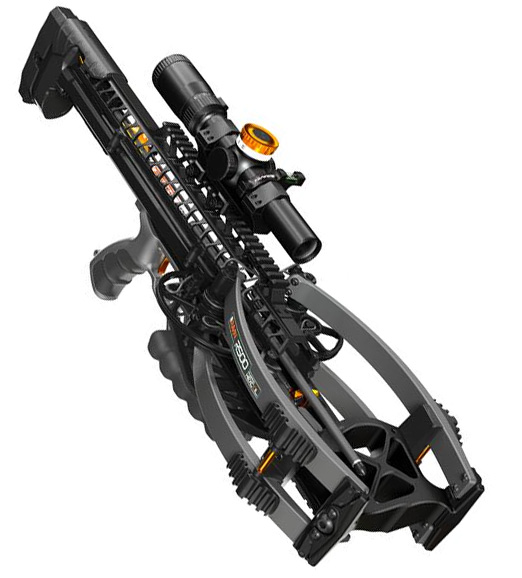
High-performance crossbows represent the cutting edge of modern hunting technology. These models frequently exceed 400 FPS and include advanced engineering features designed to maximize power and precision.
Common features include:
- Reverse-draw limb systems
- Integrated cocking cranks
- Advanced scope systems
- Ultra-compact designs for maneuverability
While these crossbows are more expensive, they offer exceptional performance and are favored by hunters who demand top-tier equipment.
Benefits of high-end crossbows include:
- Flatter shooting trajectories
- Reduced holdover at longer ranges
- Improved stability and balance
- Enhanced durability
For experienced hunters pursuing larger game or hunting in challenging terrain, these models can provide a significant advantage.
Some premium hunting crossbows now exceed 450 FPS. See our list of the fastest crossbows you can buy for the latest high-performance designs.
Recurve vs Compound Crossbows for Hunting
Both recurve and compound crossbows are used successfully in hunting situations, but each design offers different advantages.
Recurve Crossbows
Recurve crossbows use a simpler limb system without cams or pulleys. This straightforward design makes them easy to maintain and repair in the field.
Pros:
- Simple construction
- Easier string replacement
- Fewer moving parts
Cons:
- Wider limb span
- Slightly lower speeds
- More physical effort to cock
Recurve crossbows are popular among hunters who prioritize reliability and simplicity.
Compound Crossbows
Compound crossbows use cam systems that store additional energy, allowing them to generate higher speeds with shorter limb widths.
Pros:
- Faster bolt speeds
- More compact design
- Higher energy output
Cons:
- More complex maintenance
- String replacement often requires a press
Most modern hunting crossbows are compound designs due to their superior speed and compact size.
If you’re unsure which design suits your hunting style, read our full guide on recurve vs compound crossbows to understand the pros and cons of each.
Choosing the Right Bolt and Broadhead Setup
Even the best crossbow won’t perform well with poor ammunition choices. Bolts and broadheads are critical components of any hunting setup.
Bolt Weight
Heavier bolts generally provide:
- Greater penetration
- Increased momentum
- Reduced noise
Many hunters prefer bolts weighing 400–450 grains total (including the broadhead).
Broadhead Selection
Broadheads fall into two main categories.
Fixed Blade Broadheads
- Extremely durable
- Reliable penetration
- Simple mechanical design
Mechanical Broadheads
- Expand on impact
- Create larger wound channels
- Often fly more like field points
Both styles can be effective when matched with the correct crossbow setup.
Ethical Hunting DistancesOne of the most important aspects of crossbow hunting is understanding ethical shooting distances.
Many experienced hunters recommend limiting shots to 30–40 yards to ensure ethical harvests. The National Deer Association also emphasizes the importance of responsible shot placement and ethical hunting practices.
Even high-speed crossbows should not encourage reckless long-range shots. Environmental factors such as wind, animal movement, and shooting angles all affect accuracy.
Practicing regularly at realistic hunting distances helps ensure clean, ethical kills.
Crossbow Hunting Setup Tips
Preparing your crossbow properly can greatly improve success in the field.
Important setup steps include:
Proper Scope Zeroing
Most crossbow scopes include multiple reticles designed for different distances. Zeroing the scope at 20 yards is common practice.
This allows the additional reticles to correspond with longer distances.
Regular String Maintenance
Crossbow strings experience significant stress and should be waxed regularly to prevent wear.
Inspect the string and serving for:
- Fraying
- Separation
- Uneven wear
Proper maintenance helps extend equipment lifespan and maintain accuracy.
Practice from Real Hunting Positions
Many hunters practice only from a bench rest, but real hunting situations rarely allow perfectly stable shots.
Practice shooting from:
- Tree stands
- Kneeling positions
- Ground blinds
This builds confidence and improves shot placement when a real opportunity appears.
Hunting Crossbows vs Recreational Crossbows
While recreational crossbows can sometimes be used for hunting, dedicated hunting models typically offer several advantages.
Hunting crossbows prioritize:
- Higher kinetic energy
- Durable materials
- Quieter shot cycles
- Improved optics compatibility
Recreational crossbows may focus more on affordability or target shooting performance.
For hunters planning to pursue game regularly, investing in a purpose-built hunting crossbow is usually the better long-term choice.
Final Thoughts
The best crossbows for hunting combine power, accuracy, reliability, and quiet performance. While modern crossbows offer impressive speeds and advanced features, success in the field ultimately depends on preparation, practice, and ethical shot placement.
Whether you choose an entry-level model or a premium high-performance crossbow, the key is selecting equipment that fits your hunting style and practicing regularly before the season begins.
With the right setup and preparation, crossbow hunting can be one of the most rewarding and effective methods for harvesting game in a wide variety of environments.