

Recurve vs compound crossbows is one of the most common comparisons buyers make when choosing their first crossbow. At first glance, both designs may seem similar — but the differences in performance, maintenance, and handling can significantly impact your decision.
At first glance, they may look similar. Both shoot bolts (arrows), both can be used for target shooting or hunting, and both come in a wide range of price points.
But the internal design differences significantly affect:
- Speed and power
- Size and handling
- Maintenance requirements
- Long-term ownership costs
- Beginner friendliness
Understanding these differences helps you avoid buying a crossbow that doesn’t fit your needs.
If you’re still early in the buying process, you may also want to read:
How to Choose a Crossbow
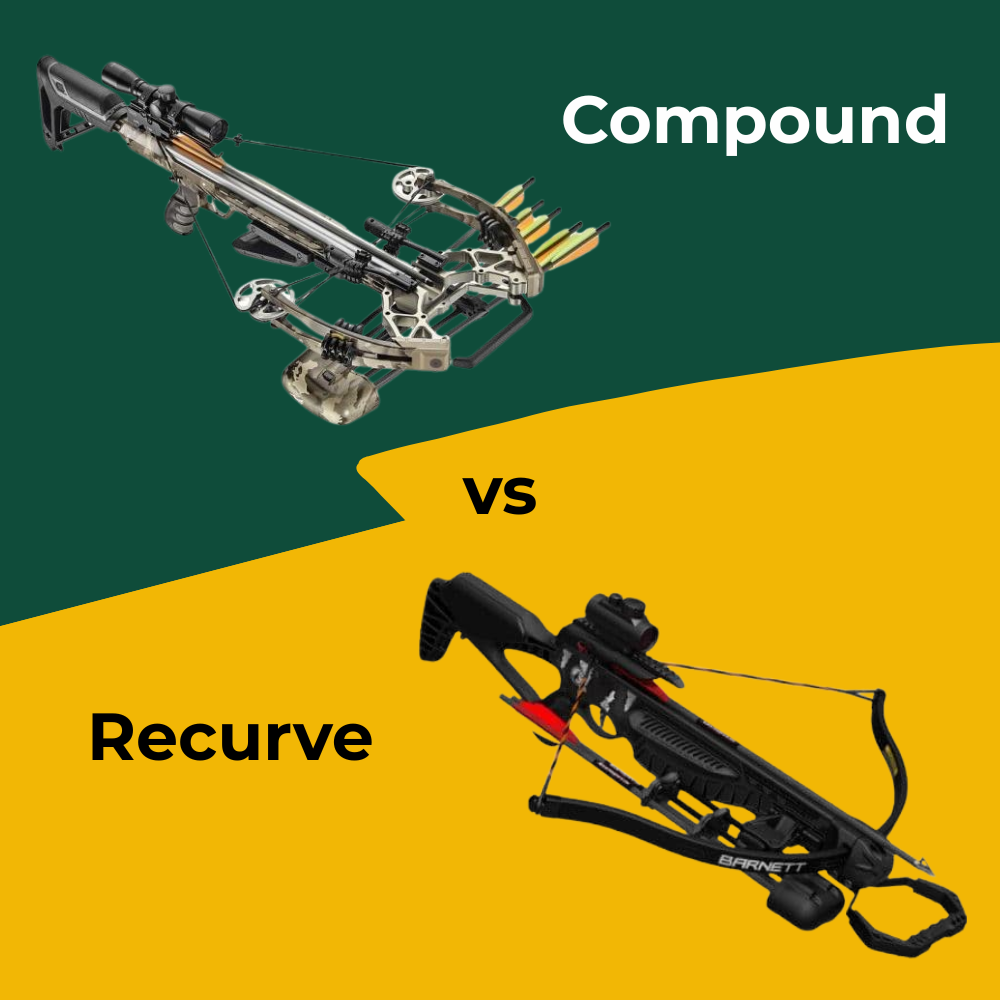
Recurve vs Compound Crossbows: Quick Overview
Before diving deep, here’s the simple breakdown:
Recurve Crossbows
- Simpler design
- Fewer moving parts
- Easier to maintain
- Typically wider limb span
Compound Crossbows
- Faster arrow speeds
- More compact limb design
- Typically quieter
- More mechanically complex
Neither is universally “better.” The right choice depends on your priorities.
How Recurve Crossbows Work
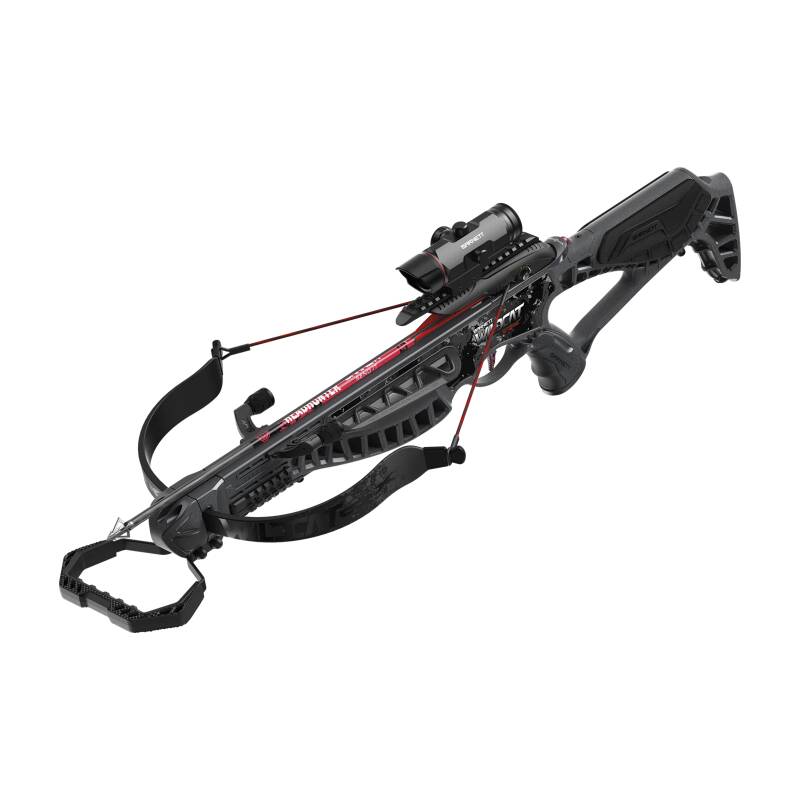
A recurve crossbow uses simple curved limbs attached directly to the riser. When the string is drawn back, the limbs flex and store energy. When released, that stored energy propels the bolt forward.
There are no cams, pulleys, or cable systems involved.
This simplicity is the defining feature of recurve designs.
Pros of Recurve Crossbows
1. Simpler Mechanics
Recurve crossbows have fewer moving parts. That means:
- Less complexity
- Fewer potential mechanical failures
- Easier troubleshooting
For users who prefer straightforward equipment, this simplicity is appealing.
2. Easier Maintenance
With no cam system to tune, maintenance is generally simpler.
Tasks like:
- Replacing strings
- Inspecting limbs
- Routine care
…are often more straightforward compared to compound systems.
If you’re concerned about upkeep, a recurve can feel less intimidating.
3. Often More Affordable
Recurve crossbows are commonly available at lower price points compared to compound models with similar performance.
If budget is a major factor, you may want to compare options in:
Best Crossbows Under $500
4. Durable Design
Because of their simpler construction, recurve crossbows can be durable and reliable over time.
Less complexity can mean fewer components that require adjustment or servicing.
Cons of Recurve Crossbows
1. Wider Limb Span
Recurve crossbows are typically wider, especially when cocked.
This can make them:
- Less compact in tight spaces
- Slightly harder to maneuver
For hunting in confined environments, width can matter.
2. Generally Slower
While modern recurve crossbows can still deliver solid speed, they usually don’t match the top-end performance of compound models.
Speed isn’t everything — but it can influence trajectory and energy.
3. May Feel Less Compact
Because of limb design, recurve crossbows often feel less “engineered” or compact compared to modern compound systems.
For some buyers, aesthetics and footprint matter.
How Compound Crossbows Work
Compound crossbows use a system of cams and cables to increase stored energy efficiency.
Modern compound systems are part of broader archery engineering advancements supported by industry organisations such as the Archery Trade Association, which promotes equipment standards and best practices across the archery community.
When the string is drawn back:
- Cams rotate
- Cables tighten
- Energy storage increases
This system allows for:
- Higher arrow speeds
- More compact limb designs
- Increased efficiency
Most modern crossbows on the market are compound models.
Pros of Compound Crossbows
1. Higher Speeds
Compound crossbows commonly deliver higher FPS ratings compared to recurve models.
Higher speed can mean:
- Flatter trajectory
- Less drop at distance
- More energy on impact
If speed matters to you, compare models in:
Best Crossbows Overall
2. More Compact Design
Compound crossbows are often significantly narrower when cocked.
This makes them:
- Easier to handle
- More maneuverable
- Better suited for tight shooting environments
Compactness is one of the biggest practical advantages.
3. Quieter Performance
Modern compound designs often reduce vibration and noise through advanced engineering.
For users concerned about noise, compounds may offer advantages.
4. Broad Feature Range
Compound crossbows often include:
- Advanced trigger systems
- Integrated cocking mechanisms
- Compact rail systems
- Premium materials
This allows more customization and performance tuning.
Cons of Compound Crossbows
1. More Mechanical Complexity
With cams, cables, and moving components, compounds are more mechanically complex.
This means:
- More potential maintenance
- More parts that could require adjustment
- Higher servicing cost if needed
2. Higher Price Points
Compound models often cost more than comparable recurve models.
You’re paying for engineering and compactness.
3. Maintenance Can Be More Technical
While many users never experience issues, compound crossbows can require professional tuning if something goes wrong.
For beginners who prefer simplicity, this may feel intimidating.
Recurve vs Compound: Which Is Better for Beginners?
This is one of the most common questions.
The honest answer: it depends on the beginner.
Recurve May Be Better If You:
- Prefer simplicity
- Want easier maintenance
- Have a tighter budget
- Don’t need extreme speed
Recurve models can be less intimidating for first-time owners.
If you’re still narrowing options, see:
Best Crossbows for Beginners
Compound May Be Better If You:
- Want compact handling
- Value higher speed
- Prefer modern engineering
- Plan to grow into advanced performance
Many beginners choose compound models because of size and design advantages.
Long-Term Ownership Considerations

Choosing between recurve and compound isn’t just about initial performance — it’s also about long-term ownership.
Maintenance Costs
Recurve:
- Typically simpler upkeep
- Fewer components to service
Compound:
- More complex components
- Potentially higher servicing costs
Upgradability
Compound crossbows often:
- Offer more feature upgrades
- Integrate newer technologies
- Have broader accessory compatibility
If customization matters to you, compound systems provide more flexibility.
Durability
Both designs can be durable when properly maintained.
Routine care matters regardless of type.
For recommended essentials, see:
Must-Have Crossbow Accessories
Performance Differences in Real-World Use

On paper, compounds often win in speed and compactness.
In practice, many users find:
- Accuracy depends more on user skill than bow type
- Moderate speed is sufficient for most scenarios
- Comfort and balance often matter more than design category
Choosing the right model within each category matters more than the label itself.
Common Myths About Recurve vs Compound
Myth 1: Compound Is Always Better
Not true. It depends on user priorities.
Myth 2: Recurve Is Outdated
Modern recurve models are still reliable and effective.
Myth 3: Beginners Should Always Choose Recurve
Some beginners prefer compound for its compact handling.
So Which Should You Choose?
If you value:
- Simplicity
- Lower cost
- Easier maintenance
A recurve crossbow may suit you better.
If you prioritize:
- Compact size
- Higher speed
- Advanced features
A compound crossbow may be the stronger option.
The right answer is personal.
Final Thoughts
The decision between recurve vs compound crossbows comes down to trade-offs:
- Simplicity vs engineering
- Maintenance ease vs compact performance
- Budget vs speed
Neither design is universally superior.
What matters most is matching the crossbow to your experience level, comfort preferences, and realistic usage needs.
If you’re ready to compare specific models within each category, explore:
→ Best Crossbows Overall
Or, if you’re just getting started:
→ Best Crossbows for Beginners
Choosing confidently begins with understanding the differences — and now you do.