

Buying your first crossbow is exciting, but it also comes with responsibility. Modern crossbows are powerful, accurate, and easy to handle compared with traditional bows, which can make new owners underestimate them. These crossbow safety basics will help you build safe habits from day one, whether you are target shooting in your backyard, practicing at a range, or preparing for your first hunting season.
A crossbow should always be treated as a serious piece of shooting equipment. It may look compact and simple, but once cocked, it stores a huge amount of energy. Safe use means thinking about the crossbow, the bolt, the target, the background, your hands, and the people around you before every shot.

Table of Contents
Why Crossbow Safety Matters
A crossbow combines elements of both archery equipment and firearms. It has a stock and trigger like a gun, but it launches a bolt using limbs, string, and stored mechanical energy like a bow. That combination is exactly why new owners need a clear safety routine. Hunter education guidance describes safe crossbow use as requiring the safety rules of both firearms and bows.
The biggest risk for beginners is becoming too comfortable too quickly. A new owner may learn how to cock, load, aim, and fire within a short practice session, but that does not mean they have built safe habits. Most mistakes happen during handling, loading, unloading, climbing into a stand, carrying the crossbow, or trying to solve a problem while the crossbow is already cocked.
Before worrying about speed, scope quality, hunting setup, or accessories, the first goal is simple: learn to handle the crossbow safely every single time.
Crossbow Safety Basics: The Rules Every New Owner Should Know
The first rule is to treat every crossbow as if it is loaded and ready to fire. Even if you believe it is uncocked, unloaded, or on safe, do not point it at anything you are not prepared to shoot. Keep the front of the crossbow aimed in a safe direction at all times.
The second rule is to keep your finger away from the trigger until you are ready to shoot. Many crossbows have a safety switch, and some have anti-dry-fire systems, but mechanical safety features should never replace careful handling. A safety can fail, be knocked off, or be misunderstood. Your trigger finger is the real safety.
The third rule is to know your target and what is behind it. Bolts can pass through targets, skip off hard ground, or miss entirely. A safe backstop is not optional. For target shooting, use a proper crossbow-rated target and place it in front of a safe background such as a bank, heavy backstop, or controlled range area.
The fourth rule is to keep your hands, thumbs, and fingers out of the string path. This is one of the most important crossbow-specific safety points. The string moves forward with extreme force. Any finger above the rail, near the flight deck, or inside the path of the string can be badly injured. Bowhunter education guidance specifically warns shooters to keep hands and fingers out of the string travel path.
The fifth rule is simple: never dry fire a crossbow. Dry firing means pulling the trigger without a bolt loaded. Because there is no bolt to absorb the stored energy, that energy can damage the limbs, string, cams, cables, or trigger system. It can also injure the shooter or anyone nearby. Manufacturer and hunter education guidance consistently warns against dry firing.
For a useful external reference, new owners can also review these official crossbow safety rules, which cover key points such as using the correct arrows, keeping fingers below the rail, and never dry firing a crossbow.
Learn Your Crossbow Before You Shoot
Before your first shot, read the owner’s manual. This sounds obvious, but many beginners skip it because crossbows appear simple. The manual tells you the correct bolt length and weight, cocking method, safety operation, maintenance schedule, lubrication points, and warnings specific to your model.
This matters because not all crossbows work the same way. Some have crank cocking systems. Some use rope cockers. Some have narrow reverse-draw limbs. Some have integrated cocking and de-cocking systems. Some require a discharge bolt for unloading. A safe routine on one model may not be identical on another.
New owners should learn four things before shooting:
- How to cock the crossbow correctly
- How to load a bolt correctly
- How the safety and anti-dry-fire system work
- How to safely unload or de-cock the crossbow
Never guess. If the process feels unclear, stop and check the manual or ask an experienced instructor, range officer, or dealer.
Use the Right Bolts and Broadheads
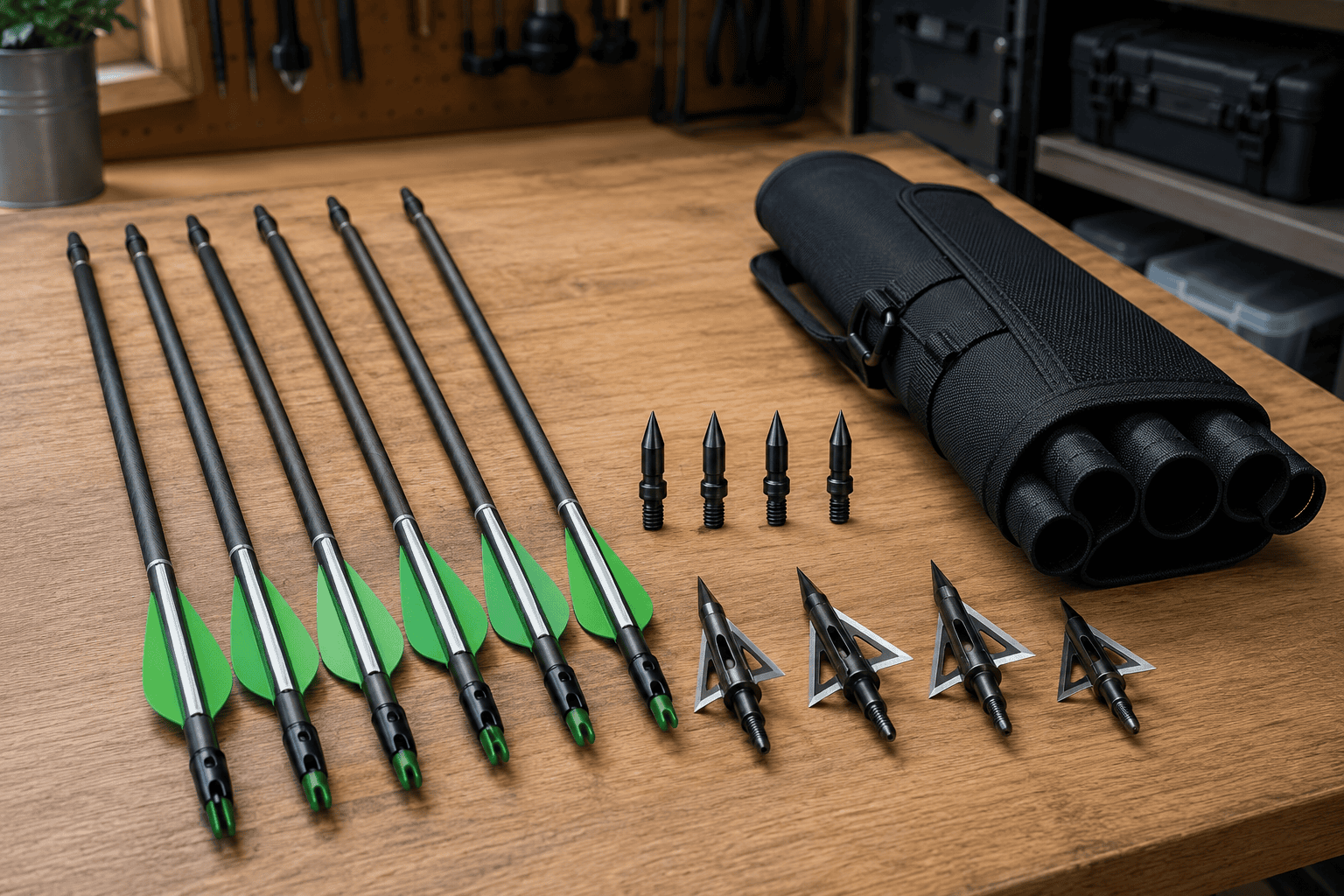
Crossbow bolts are not all interchangeable. Using bolts that are too light, too short, poorly matched, or not recommended by the manufacturer can damage the crossbow or create an unsafe shot. Bowhunter education guidance advises using arrows recommended by the manufacturer to avoid damage and injury.
For target shooting, use field points and a target rated for crossbows. Crossbows generate more force than many standard archery setups, so a normal bow target may not stop bolts reliably. For hunting, use broadheads that are legal in your area, compatible with your bolt setup, and suitable for the game you are hunting.
Inspect every bolt before use. Check for cracks, splinters, damaged nocks, loose inserts, bent shafts, or damaged fletching. Carbon bolts can fail if cracked. If you are unsure whether a bolt is safe, do not shoot it.
Safe Cocking and Loading
Only cock your crossbow when you are ready to shoot or actively preparing for a controlled shot. Do not cock it casually, carry it around unnecessarily, or leave it cocked for long periods unless your manual specifically allows it.
Use the correct cocking aid. A rope cocker helps pull the string evenly, which improves accuracy and reduces strain. A crank system can make cocking easier, especially for high-draw-weight models. Never try to cock a crossbow in a rushed, awkward, or unstable position.
When loading, keep the crossbow pointed in a safe direction. Place the bolt correctly on the rail with the correct vane orientation. Make sure the nock is seated properly against the string. A bolt that is not fully seated can cause a misfire or dry-fire-like event.
Do not place your hand in front of the broadhead or near the rail while loading. Load slowly, deliberately, and the same way every time.
Keep Your Hands Below the Rail
Hand placement deserves its own section because it is one of the most common beginner mistakes. Many crossbows have a foregrip, finger guards, or reminders built into the stock, but you still need to be conscious of where your support hand is.
Your thumb and fingers should stay below the rail and outside the string path. Do not wrap your thumb over the top of the foregrip. Do not rest fingers on the side of the rail. Do not reach forward while the crossbow is cocked. If you need to adjust anything, keep the crossbow pointed in a safe direction and follow your manual’s procedure.
This habit matters even more when wearing gloves. Thick gloves can make it harder to feel exactly where your fingers are. Practice your grip before loading so your hand position becomes automatic.
Safe Shooting Practice
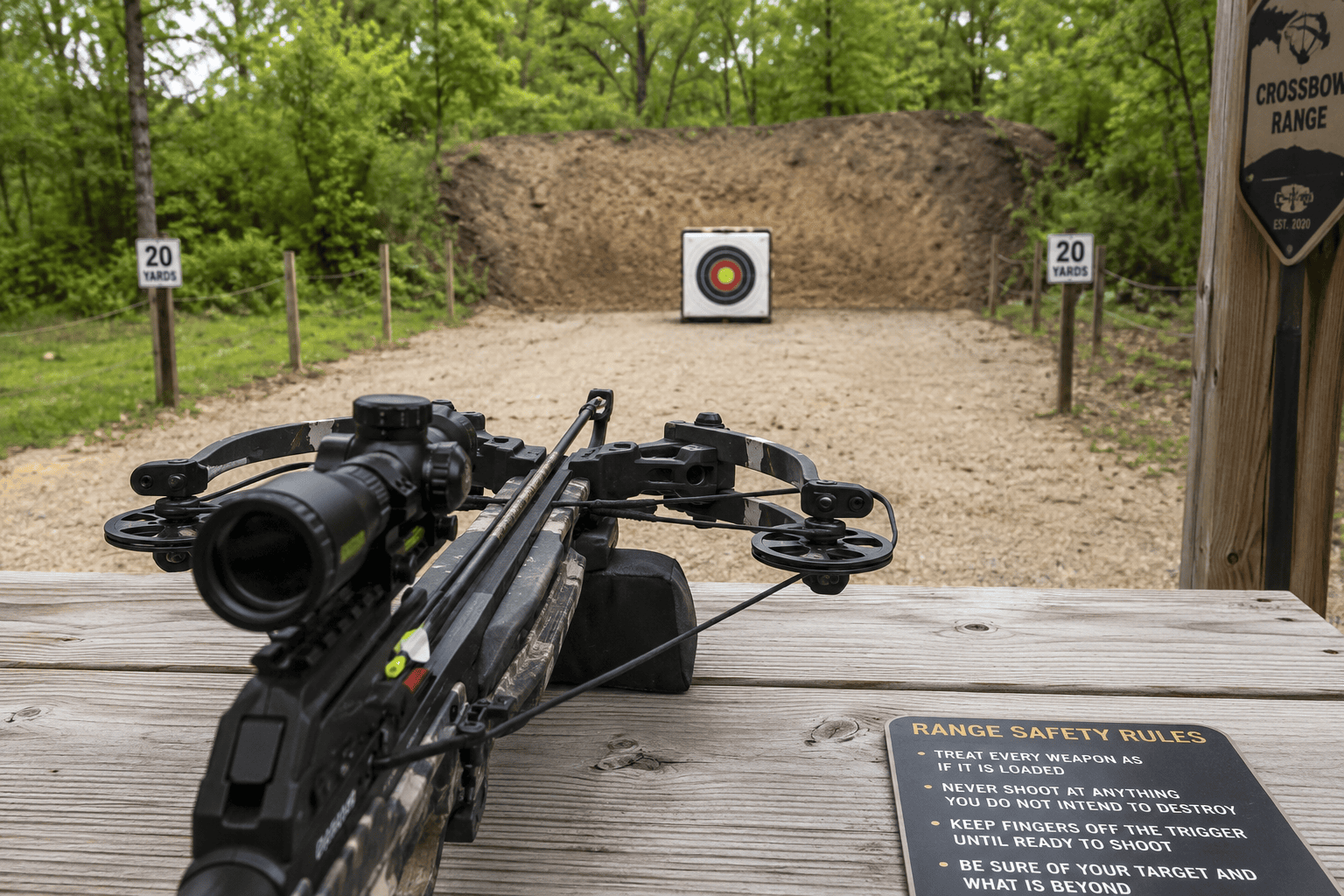
The best place for a new owner to practice is a controlled range or a private area with a safe backstop, enough space, and no risk of people or animals entering the shooting lane.
Before shooting, check the area. Make sure no one is behind the target, near the target, or likely to walk into the shooting lane. Keep children, pets, and bystanders behind the shooter. Establish a clear rule that no one retrieves bolts until all shooting has stopped and all crossbows are safe.
Start at short distance. A new owner does not need to begin at 50 or 60 yards. Start close, confirm the crossbow is sighted in, and build confidence gradually. Crossbows are accurate, but accuracy only matters when the shot is safe.
Use a proper target. Crossbow bolts can bury deeply into soft targets, damage unsuitable targets, or pass through weak ones. A crossbow-rated target protects your bolts, improves safety, and makes practice more productive.
Never Dry Fire a Crossbow
Dry firing is one of the fastest ways to damage a crossbow. When a bolt is fired normally, it absorbs much of the stored energy from the limbs and string. Without a bolt, that energy has nowhere useful to go. It can shock the limbs, derail the string, damage cams, or break components.
Many modern crossbows include anti-dry-fire systems, but you should not rely on them as permission to be careless. They are backup systems, not shooting habits. Always check that a bolt is loaded and seated correctly before moving the safety to fire.
If you accidentally dry fire your crossbow, stop using it immediately. Do not assume it is fine because it looks normal. Inspect it carefully and follow the manufacturer’s instructions. If there is any doubt, have it checked by a qualified technician before shooting again.
How to Unload a Crossbow Safely
One of the most important things new owners need to learn is how to unload or de-cock the crossbow. Do not try to remove a bolt and then pull the trigger. That is dry firing.
The safest unloading method depends on the model. Some crossbows have built-in de-cocking systems. Others require shooting a discharge bolt or practice bolt into a safe target or backstop. Wisconsin DNR guidance describes firing a bolt into a safe target as the safest way to un-cock a crossbow.
Do not unload into the air. Do not shoot into hard ground, water, rocks, trees, or unknown brush. Use a safe target. If you are hunting, carry a discharge bolt or know exactly how your crossbow should be unloaded before you leave home.
Tree Stand and Hunting Safety
Hunting adds extra safety concerns because you may be tired, cold, excited, wearing gloves, climbing, or moving through uneven terrain.
Do not climb into a tree stand with a loaded crossbow. Do not load or cock the crossbow while climbing. Use a haul line to raise and lower equipment safely, and always keep the crossbow unloaded while doing so. Nova Scotia’s crossbow safety guidance specifically advises hunters not to load or cock a crossbow in a tree stand and to unload before raising or lowering it.
Once in position, make sure the limbs are clear of branches, railings, blind windows, or other obstructions. Crossbow limbs move when fired. If a limb hits part of a blind, tree, stand, or shooting rail, the shot can fail or the crossbow can be damaged.
Be especially careful with shot angles from elevated stands. Know where the bolt will go if you miss or pass through the animal. A safe hunting shot requires a safe background, not just a clear view of the target.
Transport and Storage
Transport your crossbow uncocked and unloaded unless your local law and manufacturer instructions say otherwise. Use a case to protect the limbs, scope, string, and trigger area. Keep bolts and broadheads secured separately, especially when travelling with other people or gear.
At home, store your crossbow where children, visitors, and unauthorized users cannot access it. A locked case, cabinet, or dedicated storage area is a smart choice. Broadheads should be covered and stored safely because they can cause serious cuts even when not attached to a bolt.
Do not leave a crossbow in a hot vehicle for long periods. Heat can affect strings, cables, adhesives, and accessories. Moisture can also cause corrosion or damage over time. After wet hunting trips, dry the crossbow properly and follow your maintenance routine.
Maintenance Is Safety
A well-maintained crossbow is not just more accurate; it is safer. Before each session, inspect the string, serving, cables, limbs, cams, rail, trigger, scope mounts, bolts, and cocking device. Look for fraying, cracks, loose screws, worn serving, bent bolts, or anything that feels different from normal.
Apply rail lube, string wax, or other maintenance products only as recommended by the manufacturer. Too little maintenance can cause wear. Too much or the wrong type of lubricant can attract dirt or affect performance.
Pay attention to sound and feel. If the crossbow suddenly sounds louder, vibrates differently, shoots inconsistently, or becomes harder to cock, stop and inspect it. Small changes can be early warnings.
Know the Law Before You Shoot or Hunt
Crossbow laws vary widely by country, state, province, and even hunting season. Some places allow crossbows for target shooting but restrict hunting. Others require hunter education, bowhunter certification, specific licenses, minimum draw weights, broadhead rules, or age restrictions.
For example, UK government material on crossbow controls refers to restrictions and penalties around sale, hire, purchase, and possession by under-18s. In New York, hunters using a crossbow for deer or bear must meet specified safety training or bowhunter education requirements.
The safest approach is to check the current rules before buying, transporting, practicing, or hunting with a crossbow. Do not rely on old forum posts, assumptions, or rules from a different region.
Final Crossbow Safety Checklist
Before every shooting session, run through this quick checklist:
Is the crossbow in good condition?
Are the string, limbs, cables, bolts, and scope mounts intact?
Are you using the correct bolts?
Is the target crossbow-rated?
Is the backstop safe?
Are people and animals clear of the shooting lane?
Are your hands below the rail and out of the string path?
Is the bolt fully seated?
Do you know how you will safely unload the crossbow?
Are you following the local law and range rules?
Safety is not a one-time lesson. It is a routine. The more consistent your routine becomes, the more confident and responsible you will be as a crossbow owner.
Conclusion
Crossbows are powerful, enjoyable, and highly capable tools, but they demand respect. New owners should focus on safe handling before speed, accuracy, accessories, or hunting performance. Keep the crossbow pointed in a safe direction, keep your finger off the trigger until ready to shoot, keep your hands below the rail, use the right bolts, avoid dry firing, unload safely, and always know what is behind your target.
Master these crossbow safety basics early and every other part of ownership becomes easier, safer, and more enjoyable.